
The 5 Vowel Tones
Across many spiritual traditions, the human voice has been used as a tool for meditation, prayer, and ritual. Simple vocal sounds like vowels can be sustained on the breath, allowing the sound to resonate through the voice and body. Because vowels carry continuous sound, they have long been used in chanting practices to focus attention, calm the mind, and create a sense of inner alignment.
In several Tibetan tantric practices, for example, practitioners chant seed syllables during meditation, mantra practice and fire rituals. These sounds are often elongated so that the vibration of the voice becomes the focus of awareness. The intention is not simply to pronounce words, but to use the voice as a means of concentrating the mind and aligning with deeper states of consciousness.
The five vowel tones presented here are offered in a similar spirit. Each tone represents a vowel sound sustained on the breath. To help illustrate the qualities associated with each tone, the sounds are paired with symbolic images inspired by ancient Egyptian iconography, where simple forms often conveyed archetypal ideas.
Together, the tones form a progression from protection and awareness through truth and expression toward fulfillment and connection.
A → E → I → O → U
Some ancient Greek and late Egyptian mystical traditions used seven vowel tones corresponding to the seven Greek vowels. In later Western languages, the vowel system came to be represented by five primary vowel sounds, which form the basis of the tones used here. These tones may be explored as a reflective practice by slowly sounding each vowel and noticing how the sound resonates within the body.
The Power of Resonant Breath


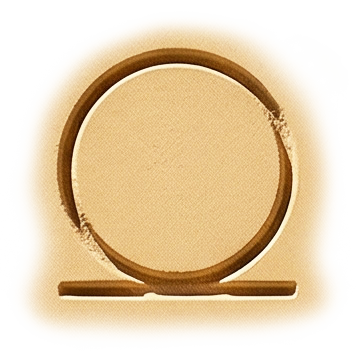
Shield/Shen Ring
The A tone establishes the protective field of awareness that surrounds the self.
In Egyptian symbolism, the encircling ring represents something that is held, protected, and preserved. Sound expressed through the A tone reflects what approaches the self while maintaining a clear boundary of awareness. This boundary protects the inner center of consciousness.
This tone forms the foundation of conscious awareness.
The Protective Circle of Awareness
Protection • Reflection
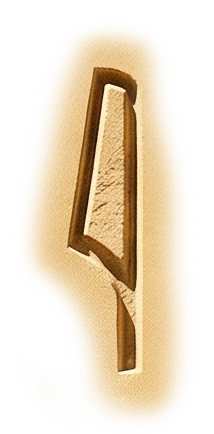

Reed/Feather of Ma’at
Truth • Discernment
The E tone introduces clarity and discernment. The reed stands upright, symbolizing alignment with truth and the ability to distinguish what is aligned from what is not. Through this tone, the mind distinguishes what is real from illusion. Sharpened discernment allows a person to recognize truth, maintain balance, and act with conscious intention.
Discernment refines awareness.
Alignment with Truth
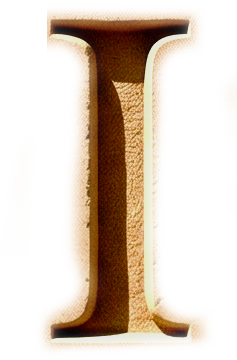

Rod/Scepter
Power • Speech
The I tone expresses directed power. The rod or staff symbolizes authority and the ability to command through word and action. This tone reflects the force of speech and the capacity to project thought outward and influence the world through conscious expression.
Power gives direction to consciousness.
Directed Expression of Will


Cup/Vessel
Commitment • Fulfillment
The O tone represents receptivity and fulfillment. The bowl or cup symbolizes a vessel prepared to receive and hold experience. Through this tone, intention becomes commitment, and actions mature toward completion. It reflects the capacity to contain experience and bring purpose into form.
The vessel allows intention to become reality.
Containment and Manifestation

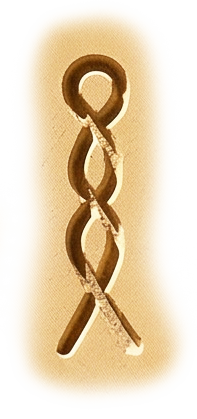
Cord/Rope
Connection • Life Line to God
The U tone symbolizes connection. The cord or braided rope represents a link between worlds, a lifeline joining the individual to a greater source of being. Through this tone, awareness moves beyond isolation and recognizes its relationship to the whole and the continuity between self and the divine.
Connection completes the progression.
Commitment and Fulfillment
Ancient Egyptian hieroglyphic writing largely recorded consonants and often omitted vowels. Readers supplied the vowel sounds when speaking the words aloud. In Egyptian religious thought, speech itself was considered powerful. Creation myths describe the world as brought into being through divine utterance. Consonants gave structure to words, while the living voice animated them through breath and sound.
Egyptian temple rituals included formal recitations of hymns, prayers, and sacred texts performed by priests. These recitations were often delivered in measured, rhythmic tones rather than ordinary speech. Later Greco-Egyptian mystical writings, including those preserved in the Greek Magical Papyri, describe ritual chanting that sometimes involved prolonged vowel sounds or sequences of vowels as part of invocations and sacred formulas. These chants are sometimes meant to imitate cosmic sounds or divine names.
In these traditions, sacred sound was understood as a way of focusing awareness and aligning the practitioner with deeper spiritual principles. By chanting slowly and rhythmically, practitioners brought breath, voice, and attention into a unified practice of contemplation and ritual devotion.
In this way, sound becomes not only a means of expression, but a tool for focusing the breath, the voice, and the mind.
The tones can also be explored through a simple personal practice.
Mystical Sounds in Practice
Explore the Tones
Each vowel naturally resonates in different areas of the body. Sounding them slowly in sequence creates a gentle full-body vibration that can calm the nervous system and focus attention.
A simple way to explore the tones is to sit comfortably, take a slow breath, and sustain each sound for several seconds:
A — ahhhhh
E — ehhhhh
I — eeeeee
O — ohhhhh
U — oooooo
Allow the sound to be soft and relaxed. Notice where the vibration naturally resonates within the body. With practice, the tones can become a simple tool for centering awareness and bringing the breath, voice, and attention into harmony.
Where the sounds resonate:
A chest / heart
E throat
I head / mind
O solar plexus
U deep breath / whole body
When breath, sound, and awareness align, even the simplest tone
can return the mind to clarity and presence.
A → E → I → O → U